
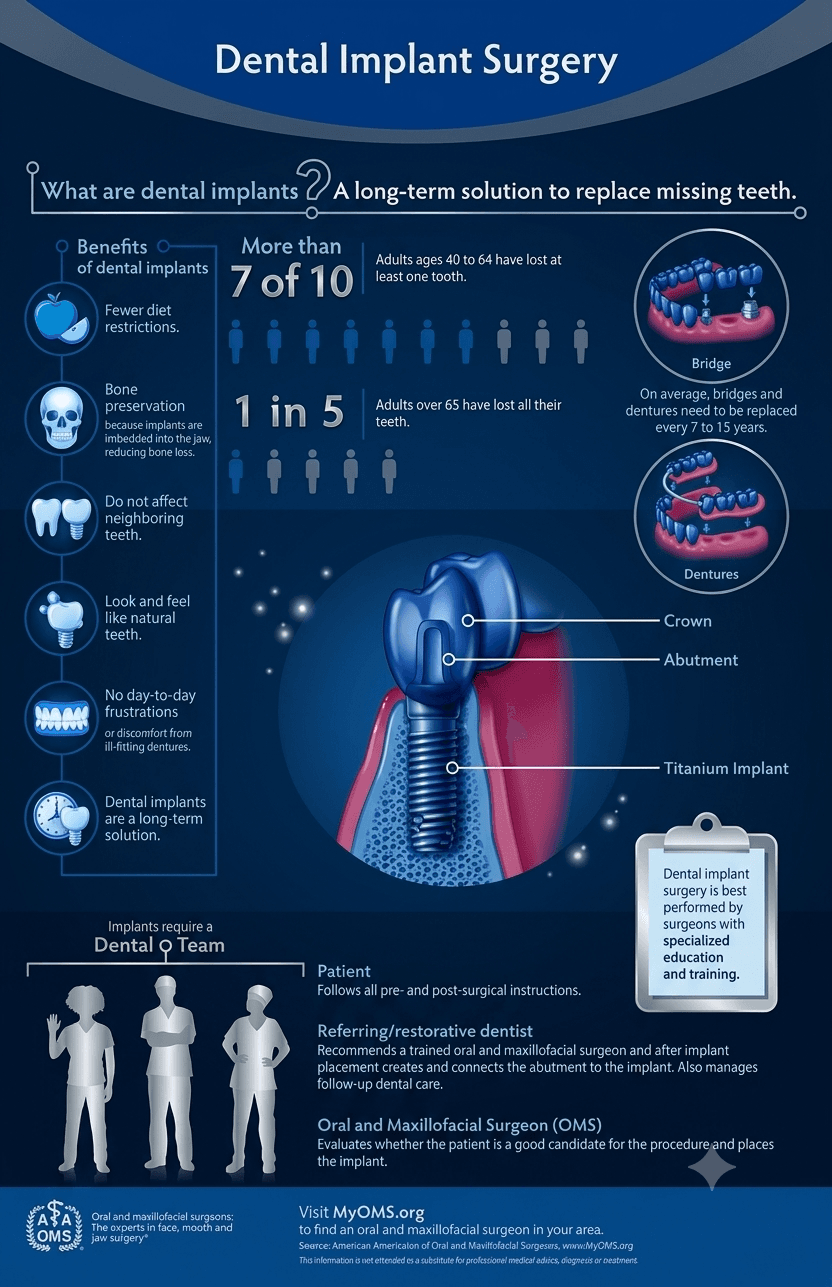
Dental implants offer several advantages over traditional tooth replacement options:
Long‑lasting solution that often outperforms bridges and dentures
Do not rely on neighboring teeth for support
Prevent bone loss by stimulating the jaw
Fit securely without slipping or shifting
Easy to care for with normal brushing and flossing
Restore natural chewing strength
Custom‑made to match the size, shape, and color of your teeth
Cost‑effective over time due to durability
Can replace a single tooth, multiple teeth, or a full arch
1. Preparatory Procedures (if needed)
Tooth extraction or bone grafting may be performed before implant placement. Healing time varies depending on the procedure.
2. Implant Placement
After the area is numbed or sedated, a small opening is made in the gum to access the bone. Specialized surgical drills are then used to precisely prepare the site for the implant, creating the exact shape and depth needed for proper stability. The dental implant is placed into this prepared space, and the gum tissue is positioned to protect the area as it heals. If a patient is interested in a temporary crown or cosmetic provisional, this is coordinated with their general or cosmetic dentist, as our office does not provide temporary restorations.
3. Abutment Placement
In most cases, a healing abutment is placed at the same appointment as the implant placement. This small component sits above the gumline and helps shape the tissue as the area heals. In situations where a healing abutment cannot be placed immediately, the implant may be covered with gum tissue and the abutment added at a later visit. Any temporary crowns or cosmetic provisional restorations are coordinated with the patient’s general or cosmetic dentist, as our office does not provide temporary crowns.
4. Final Restoration
Your dentist takes impressions to design the final crown, bridge, or denture. A dental lab fabricates the restoration to match your natural teeth. The final prosthetic is attached to the abutment, completing your smile.
Implant surgery typically takes:
Less than 1 hour for a single implant
1–2 hours for multiple implants
After surgery, you may experience mild swelling, bruising, or discomfort for a few days. Ice packs and over‑the‑counter pain relievers help manage symptoms.
Healing occurs in two phases:
Gum healing: several days
Bone integration: 3-4 months
Patients usually return to work within a few days but should avoid strenuous activity initially.
Follow‑up appointments ensure proper healing and determine when the implant is ready for the final restoration.
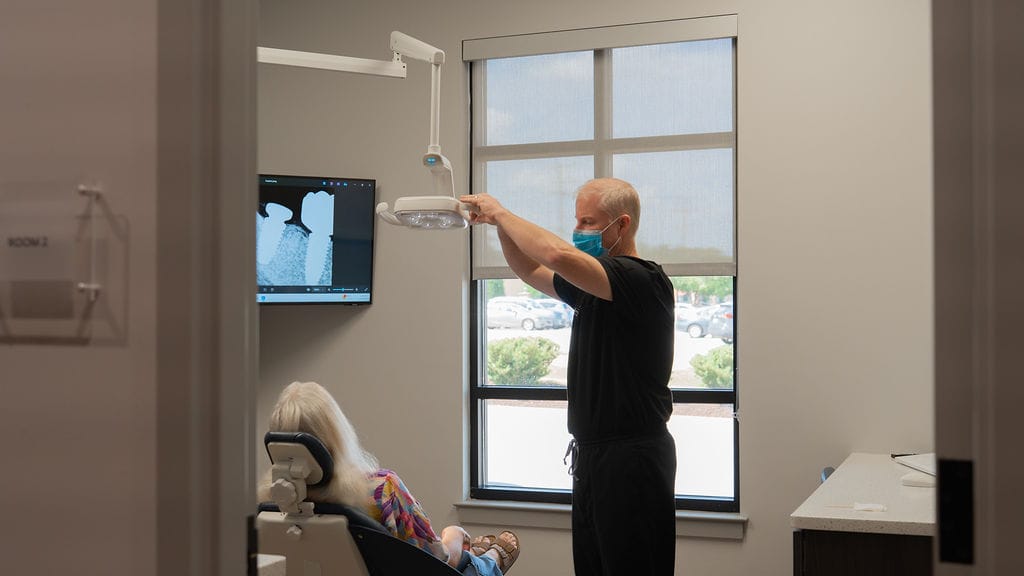


Implants are a safe and predictable procedure. Risks vary based on individual health but are minimized through careful planning and antibiotics when needed.
Temporary restorations may be provided depending on your treatment plan.
With proper care, implants can last decades — often a lifetime.
Dental implants have a very high success rate — typically over 95% when placed by an experienced oral surgeon and cared for properly. Factors like good oral hygiene, healthy gums, and avoiding smoking help ensure long‑term success.
Yes. Your final crown, bridge, or full‑arch restoration is custom‑designed by your dentist to match the color, shape, and size of your natural teeth. Once restored, most people cannot tell the difference between an implant and a real tooth.