
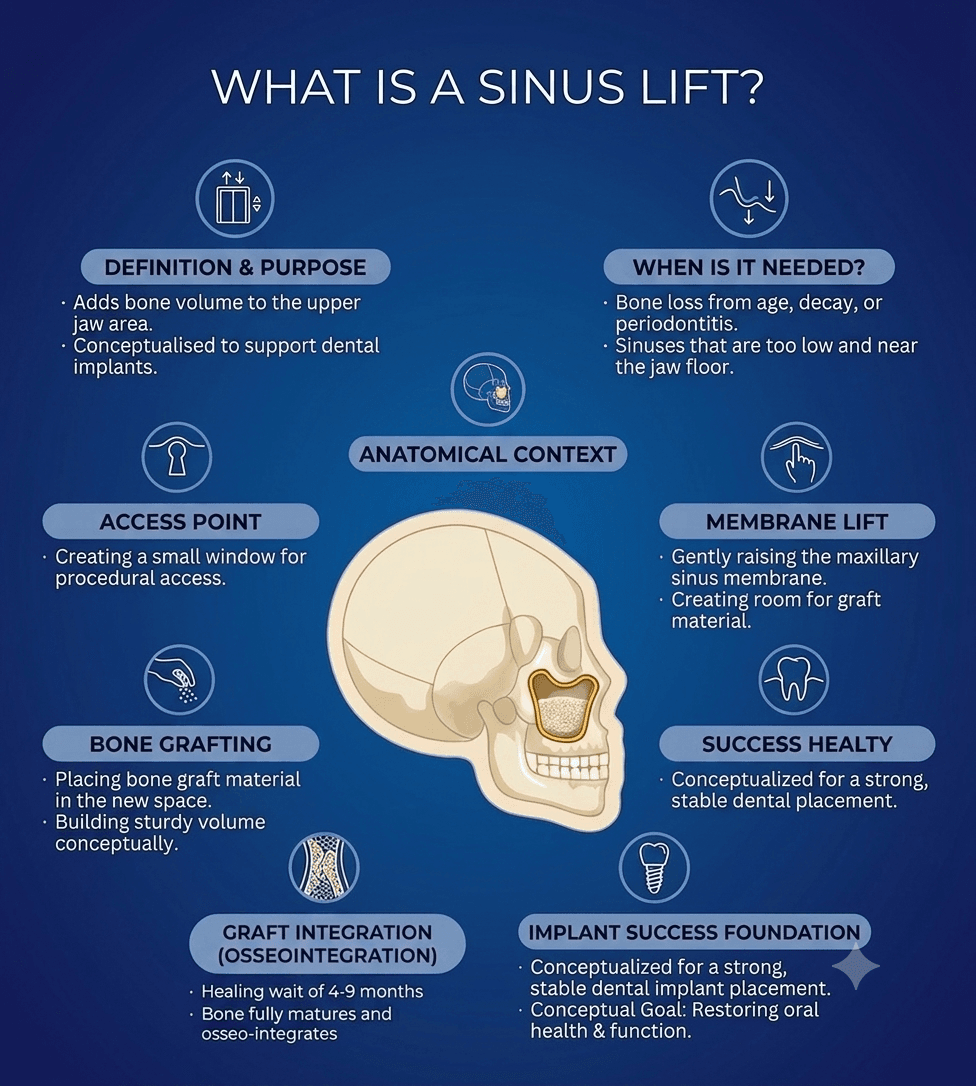
A sinus lift may be recommended if you:
Have insufficient upper‑jaw bone for dental implants
Lost bone due to missing teeth
Experienced bone loss from periodontal disease
Have naturally large sinus cavities
Need additional support for full‑arch implant treatment
Want to prevent implant failure due to inadequate bone
By increasing bone height, a sinus lift ensures long‑term implant stability and predictable treatment outcomes.
Your treatment begins with a comprehensive consultation. Dr. Cherry evaluates your sinus anatomy, bone structure, and implant goals using advanced 3D imaging.
During this visit, you’ll discuss:
Sedation options
Graft material choices
Whether implants can be placed at the same time
Expected healing timeline
Long‑term implant planning
This ensures a safe, predictable, and personalized treatment plan.
1. Preparation
The area is numbed, and sedation is provided if desired. A small opening is created to access the sinus membrane.
2. Lifting the Sinus Membrane
The sinus membrane is gently raised to create space for the graft.
3. Bone Graft Placement
Grafting material is placed beneath the lifted membrane to increase bone height.
4. Stabilization
The site is closed and allowed to heal as the graft integrates with your natural bone.
5. Implant Placement
Depending on bone volume, implants may be placed during the same appointment or after healing is complete.
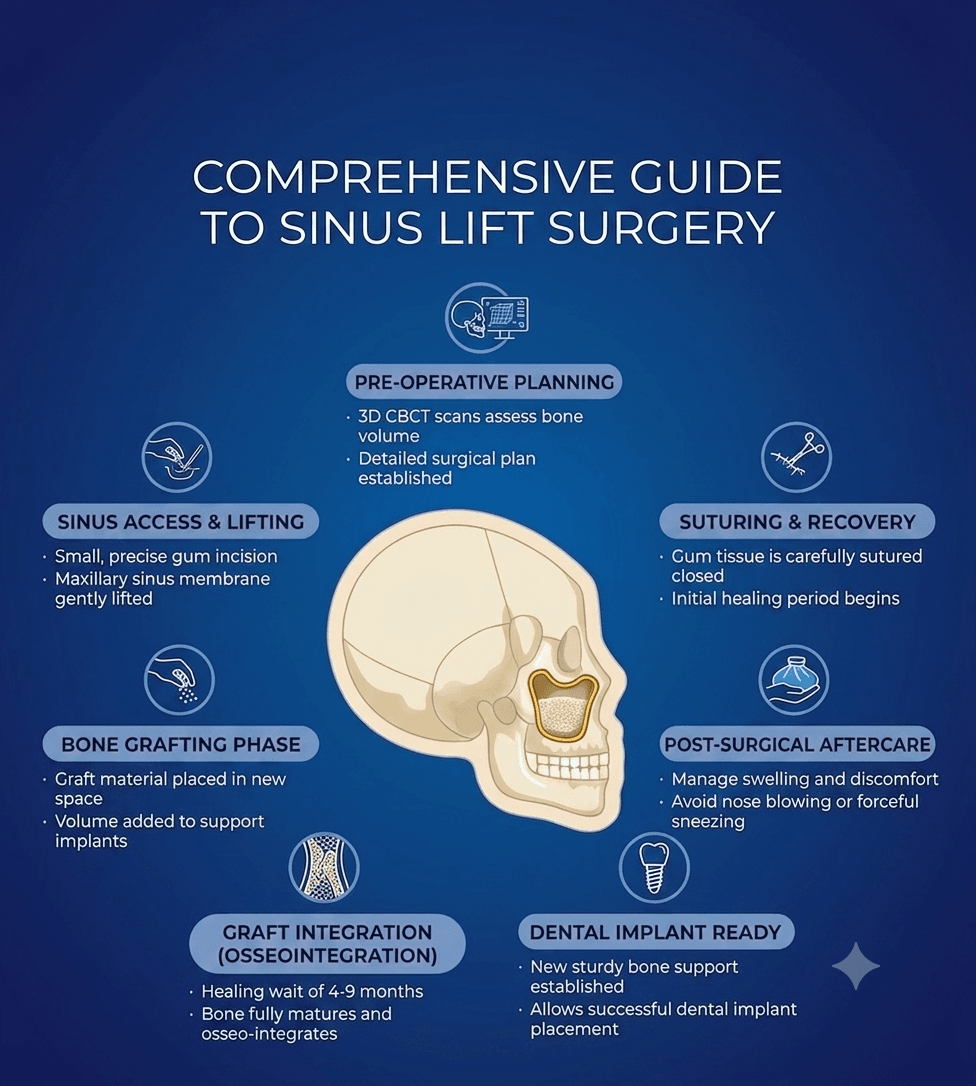

Most patients heal in 4–9 months, depending on the amount of grafting needed.
Sedation and modern techniques make the procedure comfortable. Mild pressure or congestion afterward is normal.
Yes — if enough bone is present. Otherwise, implants are placed after healing.
Options include your own bone, donor bone, synthetic materials, or xenografts.
No — once healed, the sinus functions normally.