
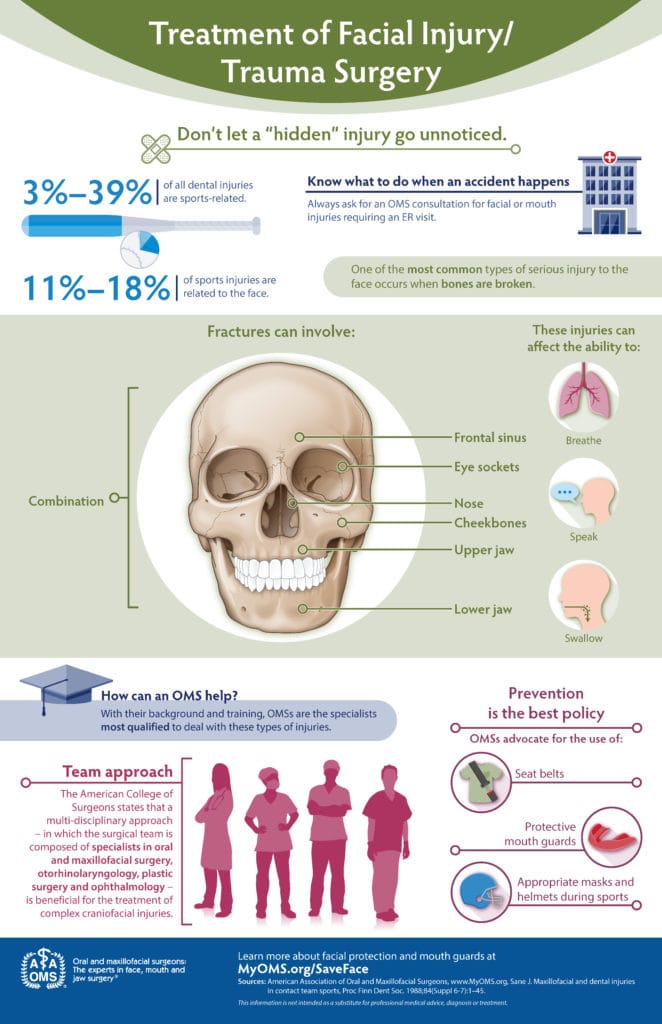
Facial Bone Fractures
The facial bones cannot be stabilized with a cast. Instead, fractures are repaired using small plates and screws to restore structure and alignment while minimizing visible scarring.
Dental Trauma
Knocked‑out or fractured teeth can often be repositioned, splinted, or stabilized. When a tooth cannot be saved, implant‑based replacement may be recommended.
Soft Tissue Injuries
Lacerations of the lips, cheeks, chin, or facial skin require careful suturing to protect nerves, muscles, and glands. Proper repair helps minimize scarring and preserve natural facial movement.
Jaw Injuries
Fractures of the upper or lower jaw may require stabilization, wiring, or surgical fixation to restore proper bite and function.
Yes — if treated quickly. Place the tooth in milk or saline and seek immediate care.
We use precise suturing techniques to minimize scarring and protect natural facial contours.
Small plates and screws are used to stabilize the bones and restore structure.
Nerve irritation is common and often temporary. We evaluate nerve function during your exam.
Healing varies by injury type but typically ranges from several days to several weeks.